
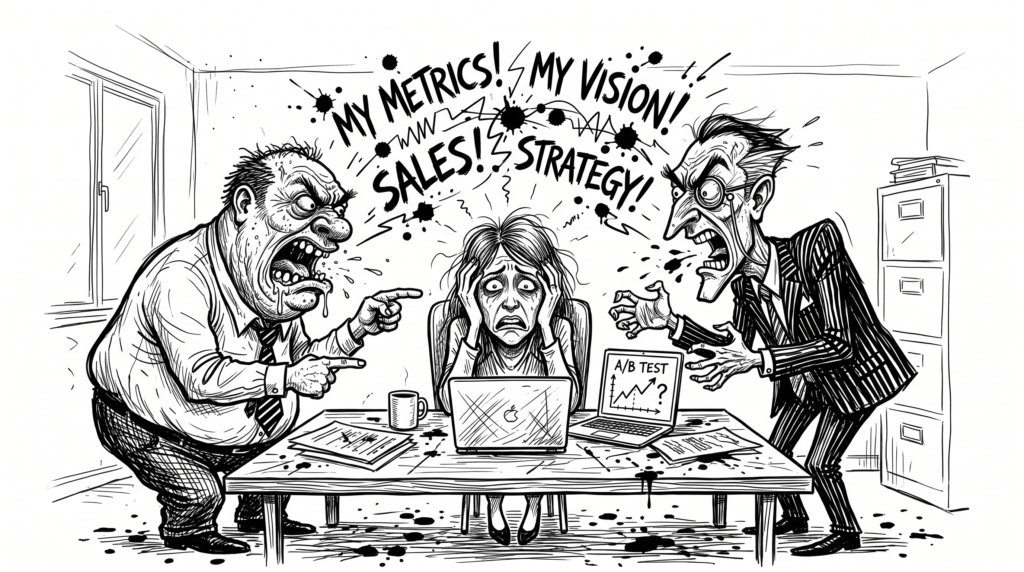
We have all been there at some point. The MD want’s us to feature a 10% discount on our start product page, but the Sales Director believes £1000 off is a better offer, and you in marketing are stuck in the middle.
So, take a deep breath and explain to your MD and SD – why don’t we try both?
Split testing (or A/B testing) is one of those concepts that sounds highly technical but is actually beautifully simple. At its core, it’s just a scientific experiment for your website. You show version A to half your visitors, version B to the other half, and let your audience’s actual behaviour declare the winner.
TO SEE HOW EASY SPLIT TESTING IS WITH OUR WEBSITE – WATCH THE SHORT VIDEO BELOW
Why Split Testing is Useful
Most website changes are based on gut feelings, design trends, or whoever has the loudest opinion in the room. Split testing replaces guesswork with hard data.
- Improves Conversion Rates: Instead of guessing what makes people buy or sign up, you let them show you. Even a tiny 1% lift in a checkout flow can translate to thousands of dollars over time.
- Reduces Bounce Rates: If visitors are leaving your site too quickly, testing different headlines or layouts can help you find the hook that keeps them reading.
- Risk Mitigation: Imagine redesigning your entire homepage only to find out your sales dropped by 20%. Split testing lets you try out big changes on a fraction of your traffic before committing.
- High ROI on Existing Traffic: Getting new traffic is expensive (especially with rising ad costs). Split testing helps you get more value out of the people who are already visiting your site.
What Can You Split Test?
You can test almost anything a user interacts with, but it is best to start with elements that have the highest impact on user decisions.
| Category | High-Impact Elements to Test |
| Copywriting | Action-oriented headlines vs. benefit-driven headlines; short vs. long-form body copy. |
| Call-to-Action (CTA) | Button color (e.g., high-contrast vs. brand-matching); button text (“Buy Now” vs. “Get Started”). |
| Visuals | Using a video hero background vs. a static image; product photos vs. lifestyle photos. |
| Layout & Flow | Moving a signup form to the top of the page (above the fold) vs. keeping it at the bottom. |
| Pricing & Offers | Displaying “$10 off” vs. “10% off”; offering free shipping vs. a lower base price. |
The Hidden Variables: What Affects Your Results?
This is the most critical section for your readers. A lot of beginners run a test for three days, see a winner, and declare victory—unknowingly making decisions based on bad data. Here are the external influences to watch out for:
1. Traffic Volume (Sample Size)
If you flip a coin 5 times, it might land on heads 4 times (an 80% success rate!). But we know a coin flip is 50/50. You just didn’t flip it enough times.
The Lesson: If your site only gets 100 visitors a month, split testing will take a long time to yield accurate results. You need enough data (conversions) to achieve statistical significance—the mathematical mathematical insurance policy that your results weren’t just a fluke.
2. Traffic Diversity & Audience Segments
Not all traffic is created equal. If version A gets a sudden burst of high-intent traffic from an email newsletter, while version B gets cold traffic from a Pinterest ad, your test is ruined.
- Source: Traffic from Google Search behaves differently than traffic from Facebook.
- Device: Desktop users might prefer a detailed, text-heavy layout, while mobile users might abandon it entirely.
3. Timing and External Events
Human behavior changes based on the calendar. A test run during the week of Black Friday will yield radically different behavior than a test run in mid-July. Even testing Monday through Wednesday versus Friday through Sunday can skew results because people browse differently on weekends.
Tips To Get You Started
- Test one variable at a time: If you change the headline and the button colour at the same time, you won’t know which change caused the result.
- Run tests for full weeks: Always run tests in increments of 7 days (usually 2 to 4 weeks) to account for weekday vs. weekend behaviour cycles.
- Don’t stop too early: Use a free A/B test calculator online to make sure your test has reached a 95% confidence level before picking a winner.
Shameless Plug
Our websites offer AB Testing – we have a ‘simple’ version as demonstrated in the video above and a more complex version with AI suggestions and more complexity. Find out more about our websites split testing capabilites here.
